Concrete, cement and mortar are construction materials that are commonly used. However, they are often confused, even though they have very different compositions and applications. In this article, we help you understand the differences so that you can choose the right material for your project.
What is cement and what is it used for?
Cement is a material made from a mixture of limestone and clay and is supplied in powder form. It has been used in construction and building for thousands of years, although it was not truly industrialized until the 19th century. Cement is an ingredient used as a binder in the manufacture of other materials. It is rarely used on its own.
The different types of cement
Cement, an essential hydraulic binder in construction, is available in a wide range of varieties, each with specific properties suited to different applications.
Portland cement, the most widely used type, is available in several grades ranging from CEM I to CEM V, each offering specific characteristics. CEM I, or pure Portland cement, consists almost exclusively of clinker, giving it high mechanical strength and great versatility. Cements from CEM II to CEM V are blended Portland cements combined with other constituents such as blast-furnace slag, fly ash or natural pozzolans, providing a broader range of performance characteristics.
It is also worth mentioning Prompt Natural Cement, which differs from Portland cement in both composition and properties. Manufactured from argillaceous limestone, this cement is characterized by its very rapid setting time, generally only a few minutes, making it particularly suitable for repair and strengthening works. Although different from Portland cement, Prompt Natural Cement is an interesting alternative for certain specific applications.
When should cement be used?
Cement is used to produce concrete, mortar and grout. It is therefore used for masonry, construction and renovation works. It is also used for emergency repairs and for work carried out in wet or aggressive environments.
Cement composition and manufacturing process
The cement manufacturing process begins with the extraction of raw materials such as limestone and clay. These materials are then crushed and ground into a fine powder known as raw meal. The raw meal is subsequently heated to a very high temperature (approximately 1,450°C) in a rotary kiln to produce clinker, a hard and durable granular material. The clinker is then cooled, ground and blended with other constituents such as gypsum to produce the cement we know today.
This complex and energy-intensive manufacturing process is currently at the heart of the cement industry's decarbonization challenges, as the sector seeks to reduce its carbon footprint by developing more environmentally friendly alternative solutions.
Mortar: a material similar to concrete
Mortar is a material whose composition is very similar to concrete. However, unlike concrete, mortar does not contain coarse aggregates. It is composed of sand, water and a binder, which may be cement, lime or a mixture of both. Once mixed, it forms a paste that gradually hardens.
When should mortar be used?
Mortar is used for common masonry work such as laying bricks, concrete blocks or stone, producing screeds, renders or joints, and anchoring or fixing components. It is also used for renovation works and applications in damp environments.
Mortar composition
The binder used in mortar may be cement, lime or a combination of both. The sand must be clean and have a grading suitable for the intended use of the mortar. The water must be clean and provided in sufficient quantity to ensure proper workability and application of the mortar.
Concrete: a robust construction material
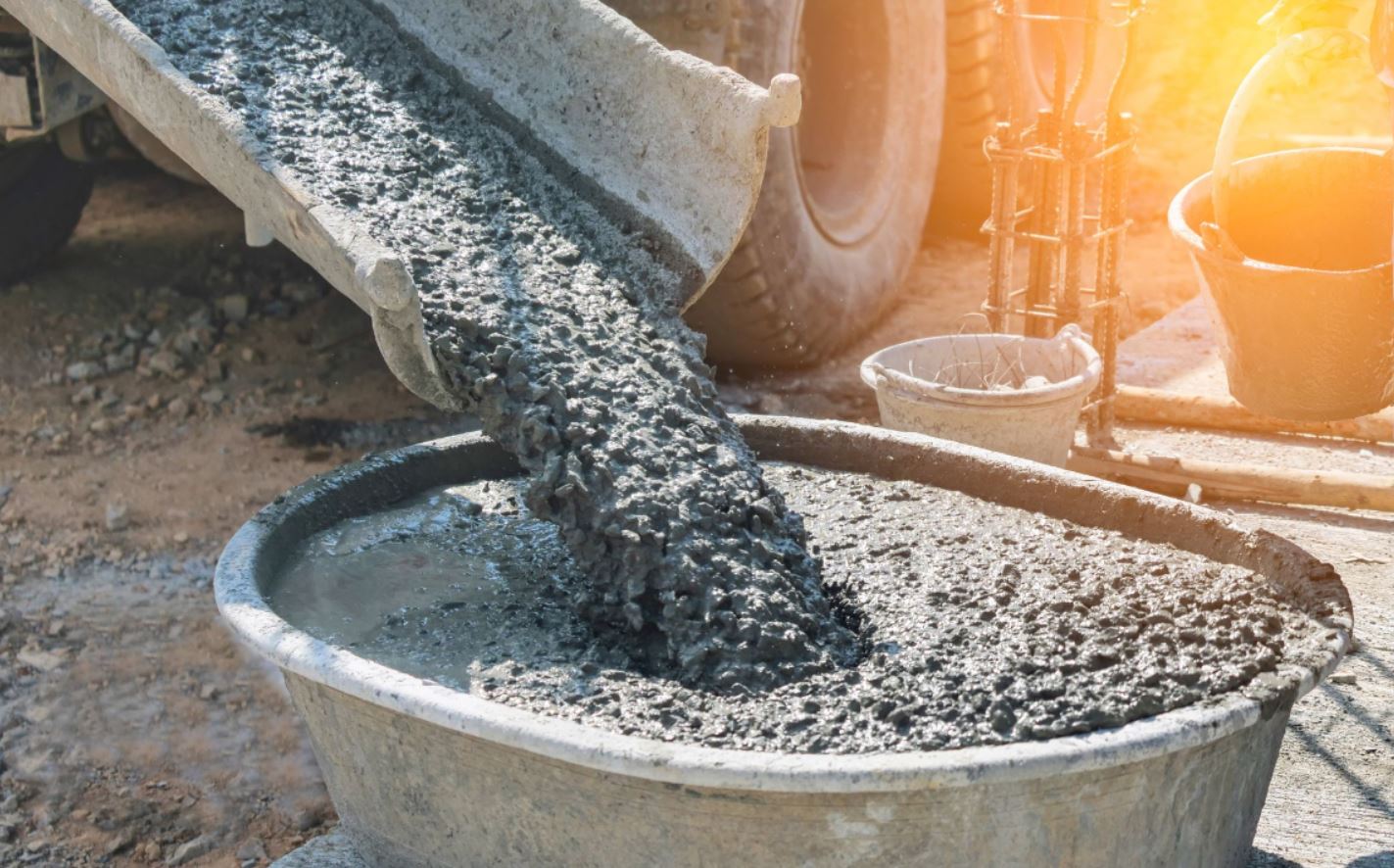
Concrete is a material used for structural construction work. Its relatively simple composition is what makes it extremely robust and gives it outstanding mechanical properties. It is used to construct structural building elements such as slabs, beams and walls. It is also widely used in road construction, public works projects, and the construction of engineering and civil infrastructure structures.
When should concrete be used?
Concrete is used for applications requiring high mechanical strength, such as structural building elements, slabs, walls and beams. It is also used in roadworks, public infrastructure projects, and the construction of engineering and civil works structures.
Concrete composition
Concrete is composed of cement, water, sand and gravel. Cement acts as the binder that hardens and solidifies the concrete. Water is necessary to enable the chemical reaction between the cement and the other constituents of the concrete. The granular materials provide concrete with its body and consistency.
Which is stronger: mortar or concrete?
Concrete is stronger than mortar. The gravel reinforces the concrete structure and increases its mechanical strength. Mortar, on the other hand, is used for standard masonry applications that do not require high mechanical strength.
Prompt cement and Portland cement: what are the differences?
Among the various cements mentioned above, Portland cement and natural Prompt cement are the two most distinct families. Their manufacturing processes, properties and uses respond to different logics. Understanding these differences allows you to choose the right cement for the right project.
Criterion | Natural Prompt cement | Portland cements (CEM I to CEM V) |
Reference standard | French standard NF P 15-314 | EN 197-1 |
Cement type | Natural cement | Artificial cement |
Composition | A single argillaceous limestone rock, without any addition | Clinker (5% to 95% depending on the type) with variable additions: blast furnace slag, fly ash, limestone, pozzolans, silica fume |
Firing temperature | 500 to 1,200 °C | Approximately 1,450 °C for clinker |
Colour | Ochre | Light grey to dark grey depending on the type |
Initial setting time | Less than 4 minutes (2 min at 20 °C) | At least 45 min for a CEM 52.5; 60 min for a 42.5; 75 min for a 32.5 |
Recommended application range | +5 °C to +30 °C | BTP best practices: from +5 °C, special arrangements above +30 °C |
Work in damp or submerged environments | Reference field of use (French standard NF P 15-317 for marine works) | Possible with certain adapted cements (CEM III with high slag content, CEM V) |
Restoration of historic buildings | Historic field of use, compatible with lime mortars and ancient substrates | Generally not recommended for historic buildings |
Standard reinforced concrete structures | Not intended for this use | Yes, main use |
Industrial origin | Single deposit (Chartreuse massif), Vicat exclusive, 100% French manufacturing | International production, multiple cement manufacturers |
When to choose natural Prompt cement?
Natural Prompt cement is the right choice when the project requires rapid return to service, work in damp or submerged environments, or compatibility with old materials. Its setting in a few minutes makes it the reference binder for emergency repairs, sealings, watertightness work and the restoration of built heritage. Its compliance with the French standard NF P 15-317 makes it suitable for marine works.
When to choose a Portland cement?
Portland cement remains the reference for reinforced concrete structures, slabs, foundations and large cast concrete surfaces. Its 28-day strengths, higher than those of Prompt cement, are matched to the loads encountered in modern construction. CEM I to CEM V cements offer strength classes (32.5 / 42.5 / 52.5) and compositions (with or without secondary constituents) adapted to most current uses.
Two complementary cements, not competitors
Prompt cement and Portland cement are not interchangeable. Each one covers a specific use. The choice depends on the return-to-service deadline, site conditions, the nature of the structure and the desired durability. On a single project, both binders may be used in turn: Portland for the structural framework, Prompt for the finishes, sealings, repairs or restoration in damp environments.