
Due to its fineness, PROMPT natural cement develops good adhesion to various construction materials such as concrete, stone, brick, as well as cast iron, PVC, and wood. The substrate should be properly moistened to prevent it from absorbing water from the mortar, which could affect the strength development and adhesion of PROMPT natural cement mortar.
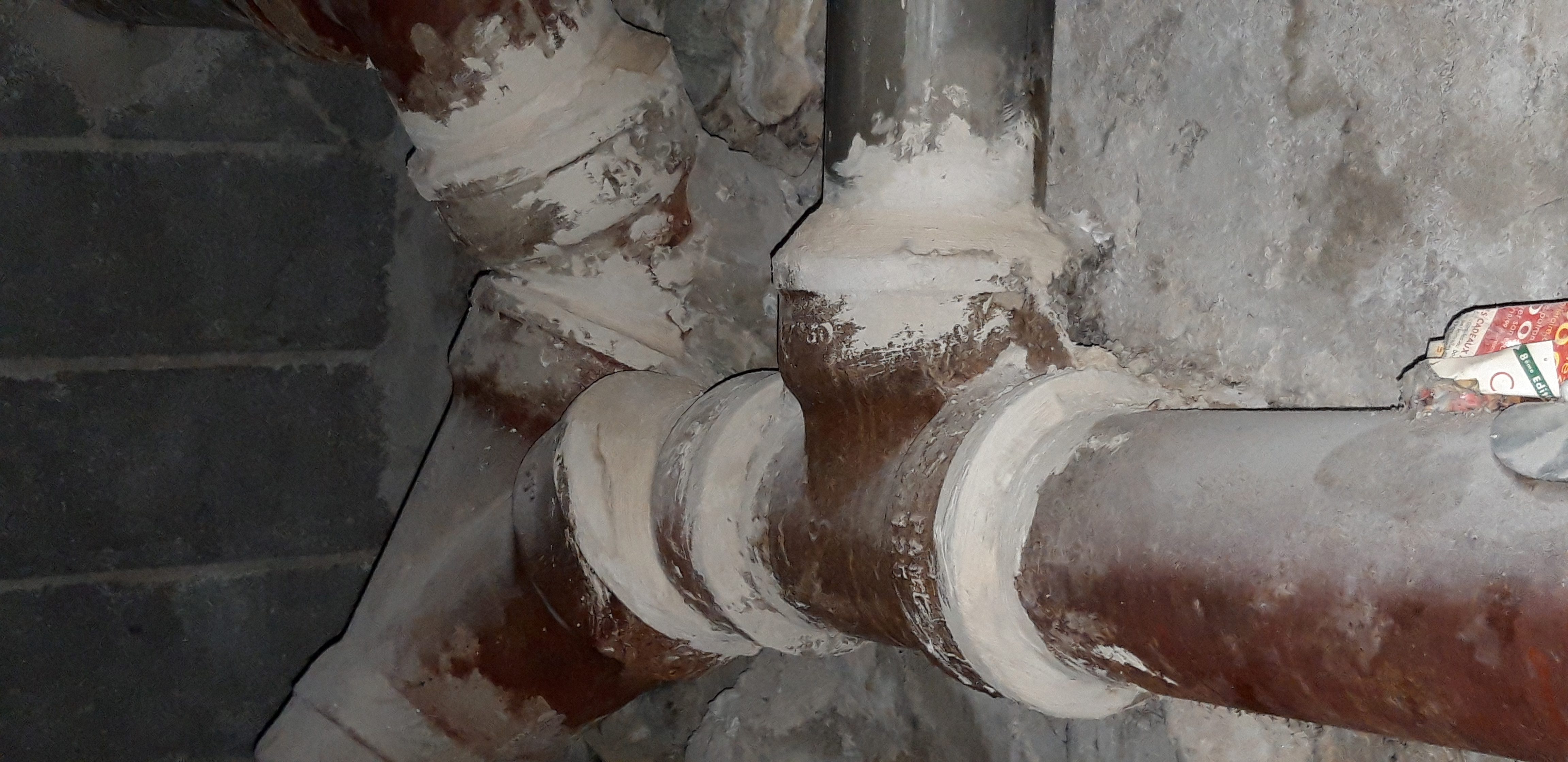
- humidifier le support,
- appliquer le mortier sur le support,
- gratter avec le champ de la truelle le mortier en laissant une couche pelliculaire de liant sur le support,
- réappliquer frais sur frais le mortier récupéré précédemment,
- appliquer les couches successives (si nécessaire) frais sur frais.
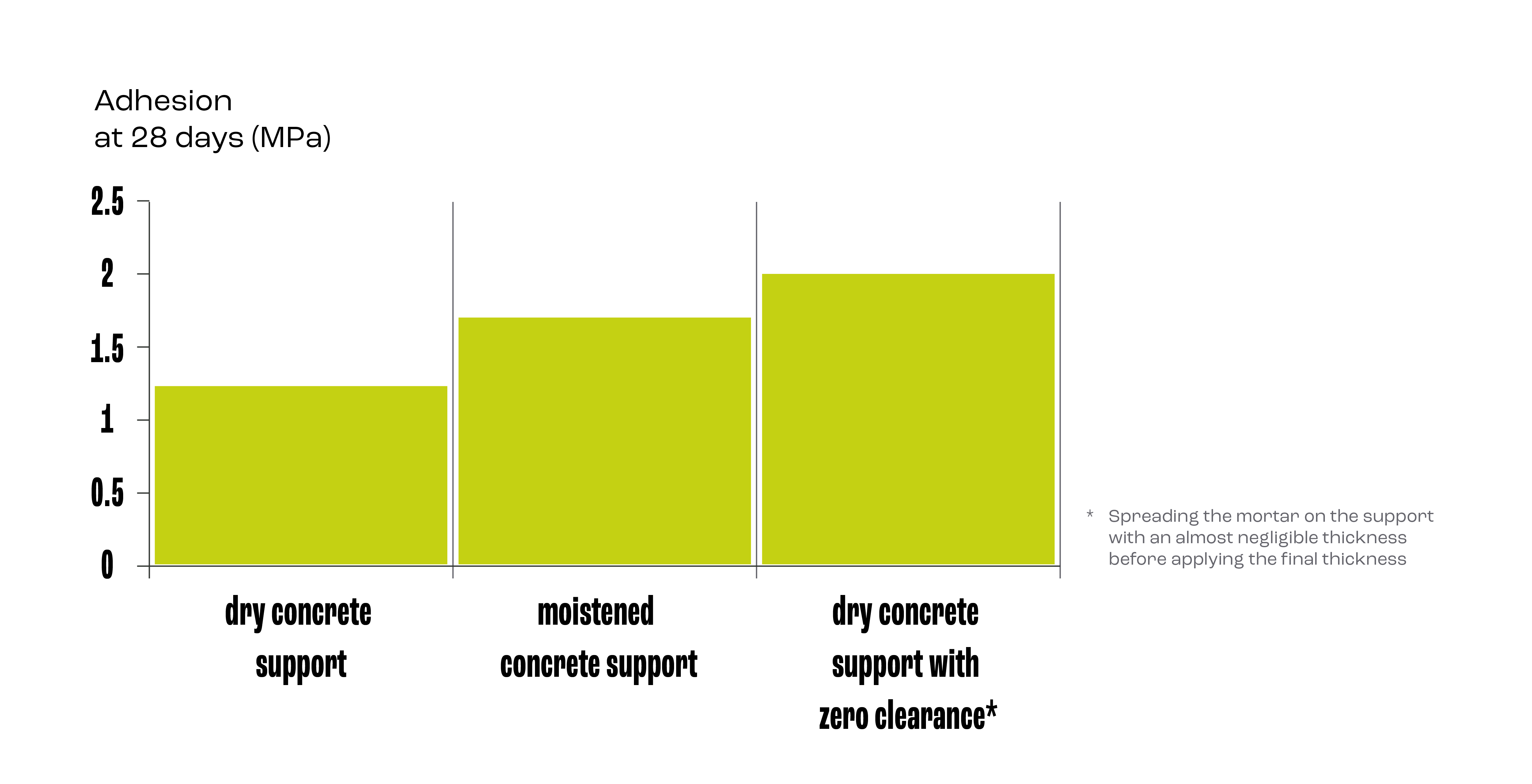
Adhesion to a moistened substrate is significantly better than the one achieved on a dry substrate, and it is further improved by preliminary screeding,
It also maintains excellent adhesion in humid or submerged environments.
Yes, dampening is essential. A dry substrate absorbs the mixing water of the fresh mortar, which disrupts the setting reaction and reduces adhesion. The substrate must be damp on the surface, with no standing water, just before application. This precaution is even more important in hot weather and on highly absorbent substrates such as brick, ancient calcareous stone or porous concretes.
Yes, its fineness allows good adhesion on these non-porous substrates, which distinguishes it from standard cements. For these materials, dampening remains useful but is not sufficient: the technique known as "tirage à zéro" is recommended to ensure a durable bond. On PVC and cast iron, ensure the substrate is clean, degreased and free from any release or non-stick coating.
Yes, provided that you work fresh on fresh. The successive layers must be applied without letting the previous one dry, which guarantees a continuous chemical bond between the passes. If a layer has dried, it must be heavily redampened and a "tirage à zéro" applied before the next layer. Never apply fresh Prompt onto already hardened Prompt without prior preparation.
The "tirage à zéro" consists of applying a thin layer of fresh mortar on the dampened substrate, scraping it with the edge of the trowel to leave only a thin film of binder, then reapplying the fresh mortar wet on wet. This thin film creates an ultra-thin and strongly anchored bonding layer, acting as a chemical bridge for the following layers. It is the recommended technique for all difficult, smooth or low-absorption substrates.
No. Plaster is chemically incompatible with cementitious hydraulic binders. The encounter of the calcium sulphate of plaster with the cement compounds, in the presence of moisture, leads to swelling and degradation reactions of the substrate. For work on plasterboard, use products specifically formulated for this substrate (plaster-based mortars or specific adhesives).