A BIT OF HISTORY
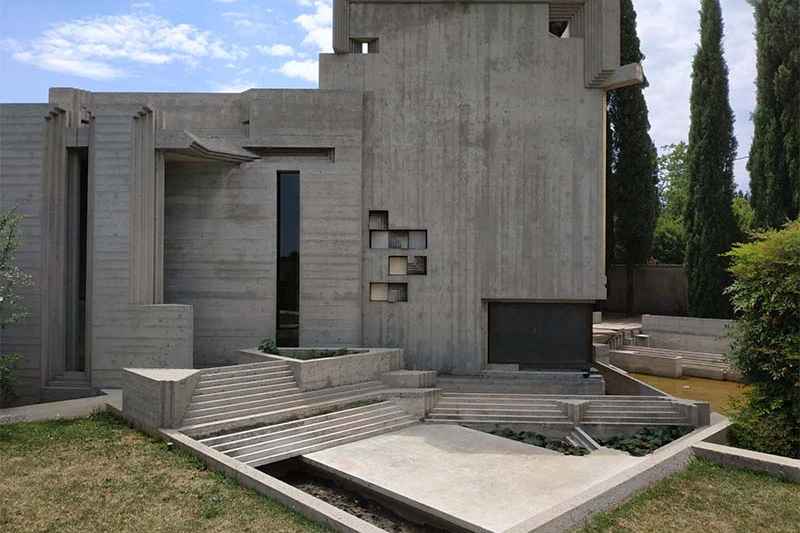
The Brion Tomb, also known as the Memorial Brion, is a funerary monument designed by Venetian architect Carlo Scarpa. Commissioned in 1969 by Onorina Tomasin-Brion, it was created in memory of her husband Giuseppe Brion, founder of the Brionvega company. Construction took place between 1970 and 1978.
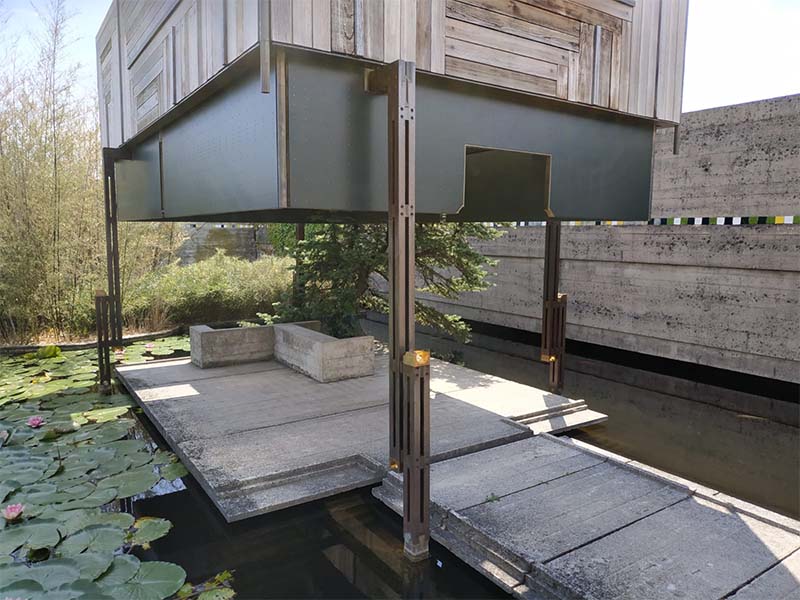
A singular work of modern architecture, the site combines concrete, water and vegetation with carefully designed graphic elements: reflecting pools, exposed concrete walls, light effects, and contrasting materials. Over time, the surfaces suffered deterioration: micro-cracks, deposits, moisture penetration and natural wear. A careful, science-based restoration was required to preserve both the architectural vision and the physical integrity of the monument.
PROJECT
The main challenge was to restore both reinforced and non-reinforced concrete surfaces while preserving historic traces, patinas and material stratifications, which are essential to the identity of the monument.
Natural Prompt cement was selected for its compatible characteristics: mechanical cohesion, durability in humid environments and visual harmony with the original concrete.
Implementation
The project began with a full analytical survey of the complex to identify types of degradation and define targeted interventions. This diagnostic phase guided a conservation strategy aligned with Scarpa’s philosophy, where every architectural detail holds symbolic meaning.
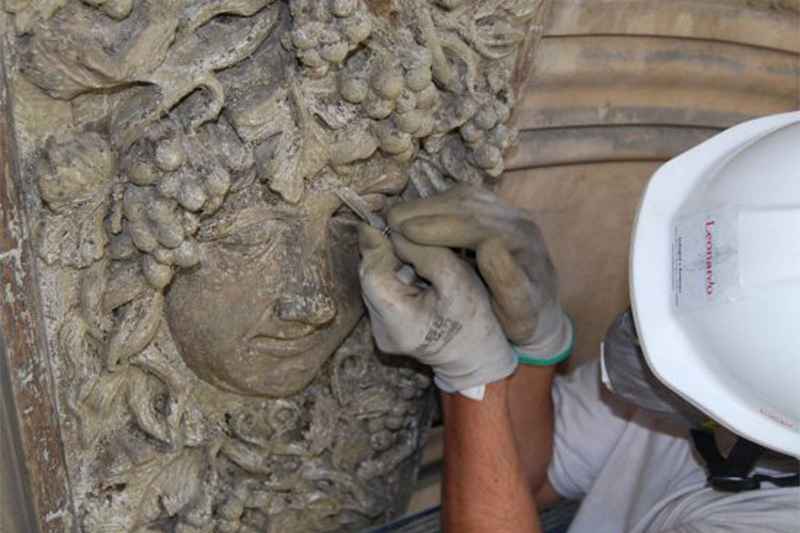
Intervention followed a principle of minimal conservation, prioritising consolidation over reconstruction. After meticulous cleaning of exposed concrete surfaces, deteriorated sections were removed and rebuilt with a precisely formulated mortar based on natural Prompt Vicat cement. Its compatibility ensured durable adhesion and chromatic consistency.
In critical areas, localised injections were made to fill micro-cracks and prevent water infiltration while preserving the original appearance of the concrete. All interventions were continuously monitored to ensure mechanical stability and visual coherence.
Thanks to this methodical and reversible approach, the restoration reinstated the structural and aesthetic balance of the monument while preserving Scarpa’s original spirit and material vision.
Stakeholders
Project owner
Brion family
Project management
Restoration project by STUDIO PIETROPOLI
Concrete conservation consultants: STUDIO FACCIO ENGINEERING S.R.L
Contractors
Cooperativa Edile Artigiana s.c.
Seres di Martina Serafin s.a.s.
Leonardo s.r.l. (Bologna)
Project timeline
2 years